


Ideas Take Flight: Increasing Bird Populations on Local Farms
Written by Truly Herbert | Photos by Brooke McDonough for the Smithsonian
Farmers invest countless hours, dollars, and buckets of sweat into their operations, and they want to ensure that they’re making the best choices for the long-term health of their farm and its inhabitants.
So when Allison Elizabeth Huysman, University of Maryland Ph.D. candidate, proposed a study that she hoped would potentially reduce agricultural pests, eight livestock and produce farms in the Middleburg and The Plains area enthusiastically agreed. Huysman is curious to discover if increasing bird populations in the region will control pests and reduce the need for pesticides.
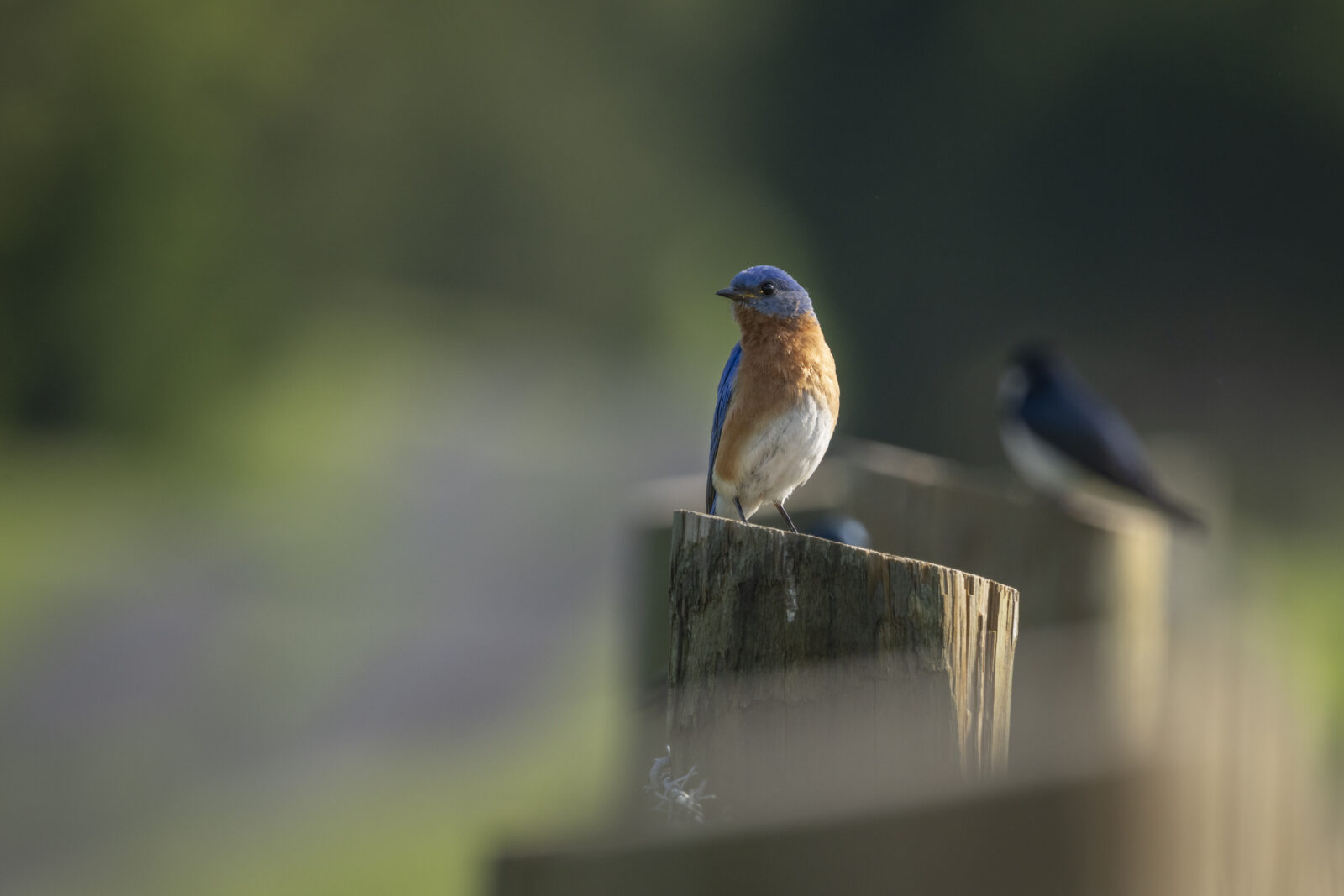
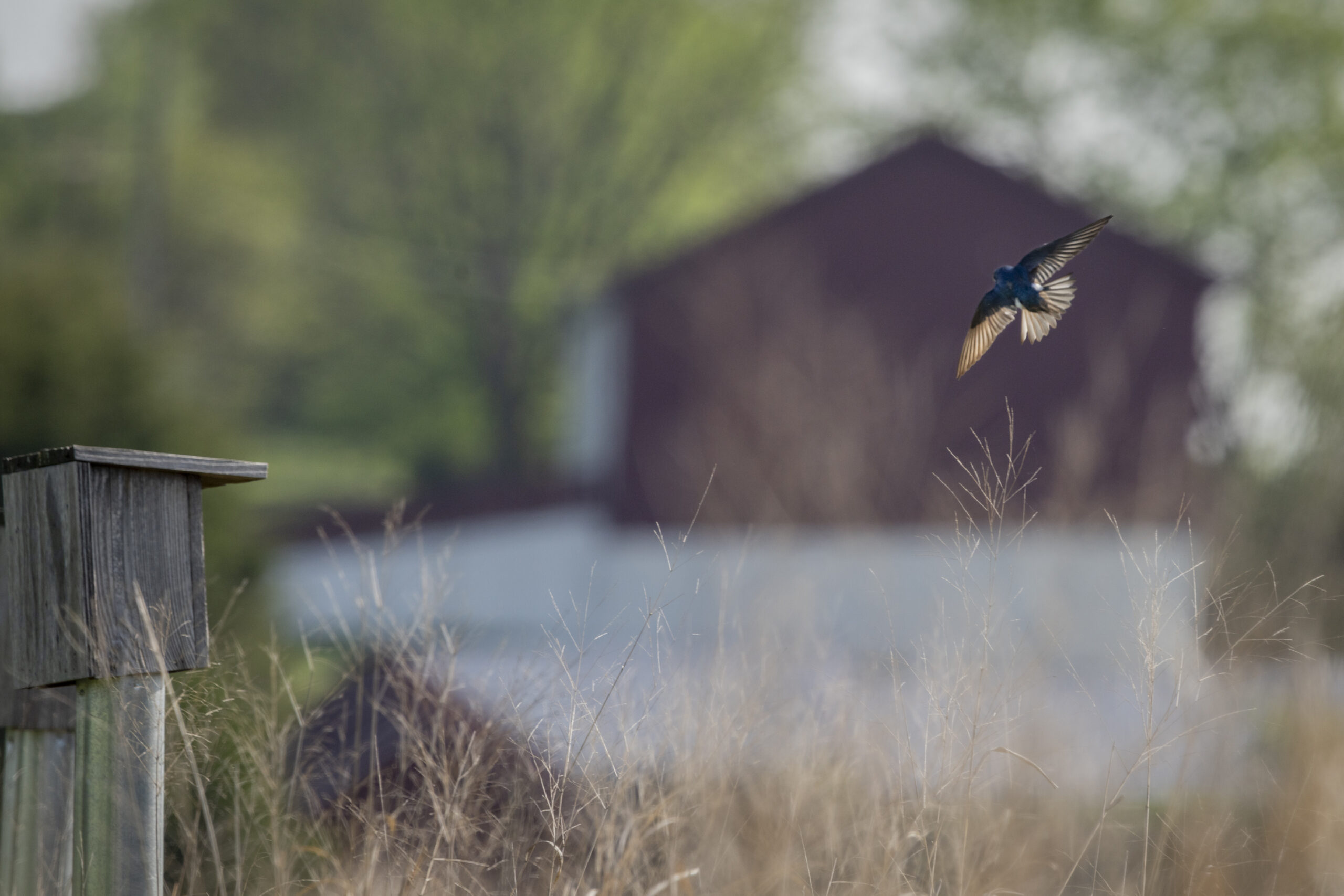
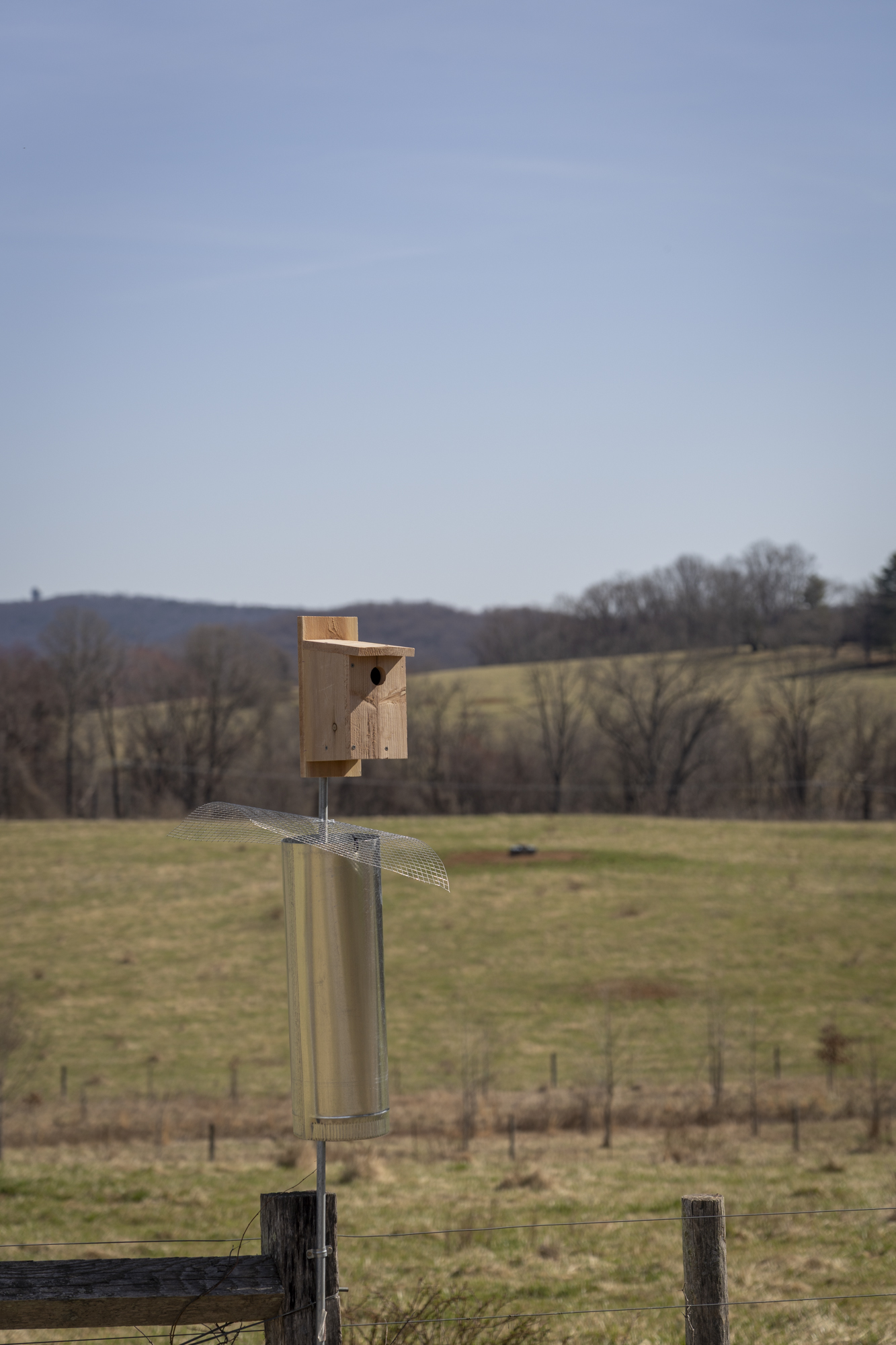
To test her theory, Huysman and her team have installed nesting boxes in a number of ideally situated spots for welcoming more cavity-nesting species like eastern bluebirds, tree swallows, and barn owls. The hope is that making attractive homes for the birds to breed in will increase their numbers and thereby reduce the abundance of agricultural pests. These and other bird species eat various types of flies, mosquitoes, moths, and rodents — pests that can wreak havoc on crops, be a source of stress for livestock, and spread disease.
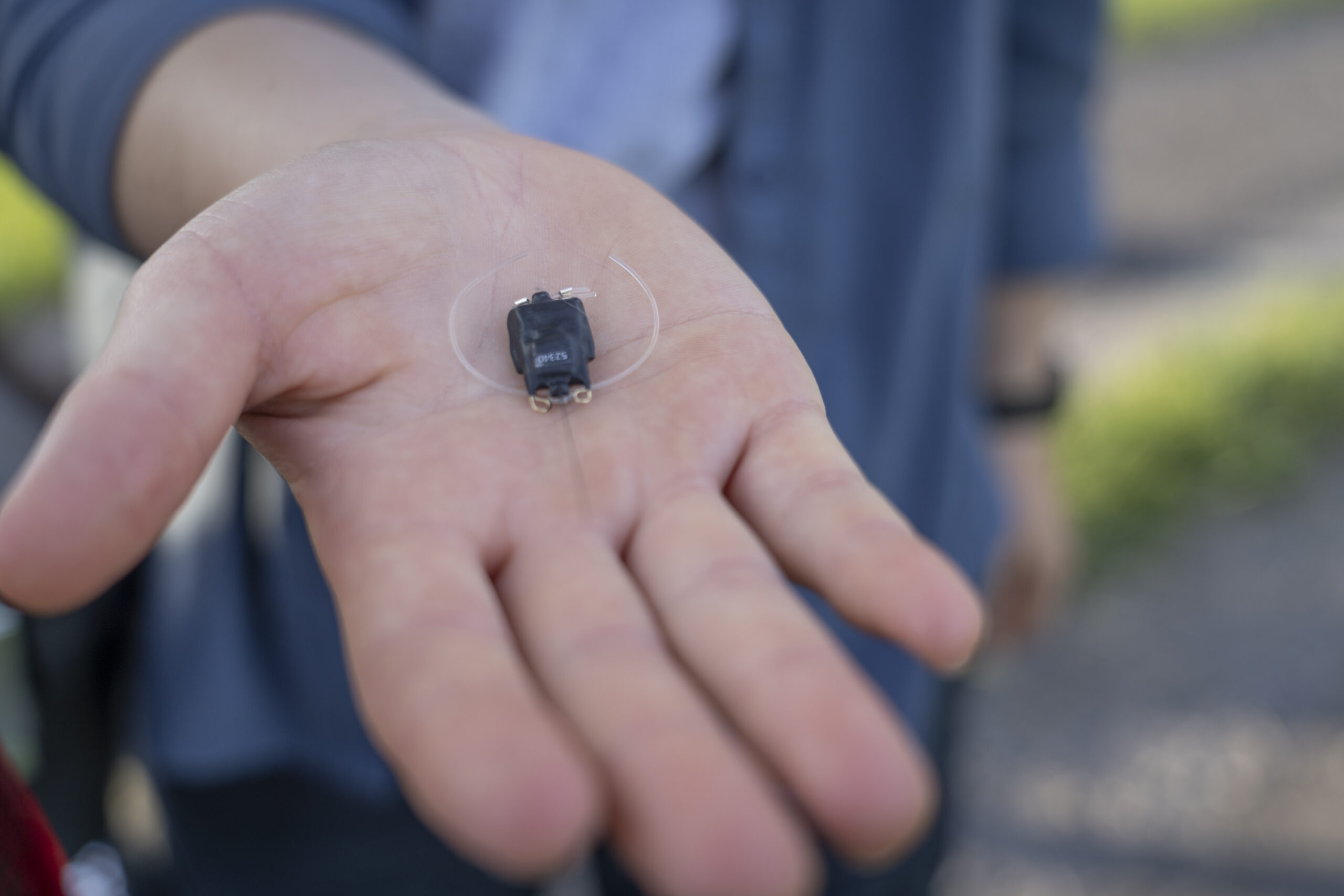
Huysman’s team applies tiny GPS tagging devices on the birds and collects fecal and insect samples to determine where the birds are going and which bugs they eat.
“Birds and insects are declining in our region,” says Huysman, “so any time we can increase numbers and remove harmful chemicals from our environments, it benefits all species, including humans.”
The project is a collaboration between the participating farms, the University of Maryland’s Department of Entomology, and the Smithsonian’s National Zoo & Conservation Biology Institute, which houses the Smithsonian’s Virginia Working Landscapes and the Smithsonian Center for Conservation Genomics, where Huysman analyzes the field samples she collects. Huysman is a research fellow at VWL and has a strong background in the topic, with degrees in animal science and natural resources from Cornell University and a master’s degree in natural resources and wildlife from California State Polytechnic University, Humboldt.
So far, the results are promising: of the 173 boxes added to the eight farms, 79% were occupied, and these birds often return year after year to the same breeding grounds.
Case Study: Kinloch Farm in The Plains
At Kinloch Farm, a 3,000-acre, family-owned farm since 1960, Huysman’s project fits perfectly into the active conservation and regenerative farming methods that Kinloch has cultivated for many years.
Regenerative farming is a practice that focuses on soil health, native plant and animal biodiversity, and clean water sources to build more resilient ecosystems and produce better yields. The approach helps minimize the need for fertilizers and pesticides.
“We are always thinking of longevity,” says Farm & Conservation Director Mike Peterson. “We carefully plan what is going to keep this land beautiful and productive for decades, even centuries into the future.”
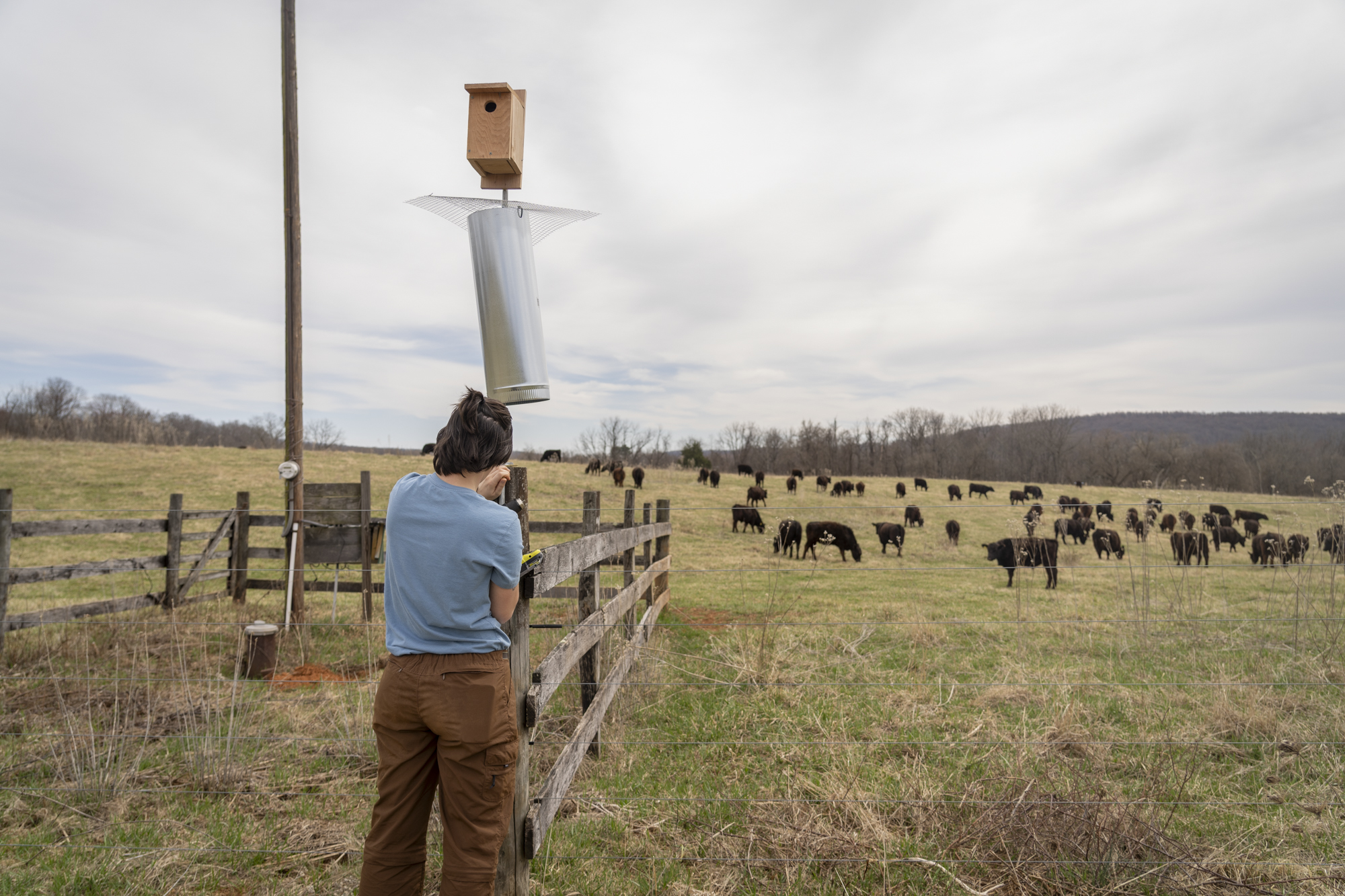
Kinloch Farm raises certified, grass-fed beef and uses adaptive grazing practices to make a tasty product that has a high nutrient composition.
Peterson’s team takes a data-driven approach to caring for the land and their livestock; they try different methods, evaluate the outcomes, and refine their actions accordingly. Kinloch maintains multiple partnerships and participates in various scientific projects that help drive the land management and conservation decisions that Peterson and his team make.
Peterson plans to continue adding many more nest boxes to the farm after the study concludes this summer. The team is looking to continue a virtuous cycle that will restore the land as close as possible to its natural state.
If Huysman’s theory proves true, the potential benefits to the land, people, and animals abound. The ecosystem becomes more balanced, workers and animals are free from exposure to pesticides, and farmers save money — it’s a winning scenario for the entire system.
To view the 2025 study results for Kinloch Farm, visit kinlochfarm.com/conservation.
You can visit the Kinloch Farm Store Thursday through Sunday from 10 a.m. to 6 p.m. at 4559 Old Tavern Road in The Plains, or buy Kinloch’s grass-fed beef and honey online at shop.kinlochfarm.com/products. ML
Published in the April 2026 issue of Middleburg Life.