


An MFF Discussion: AI and Film
Written by Laticia Headings
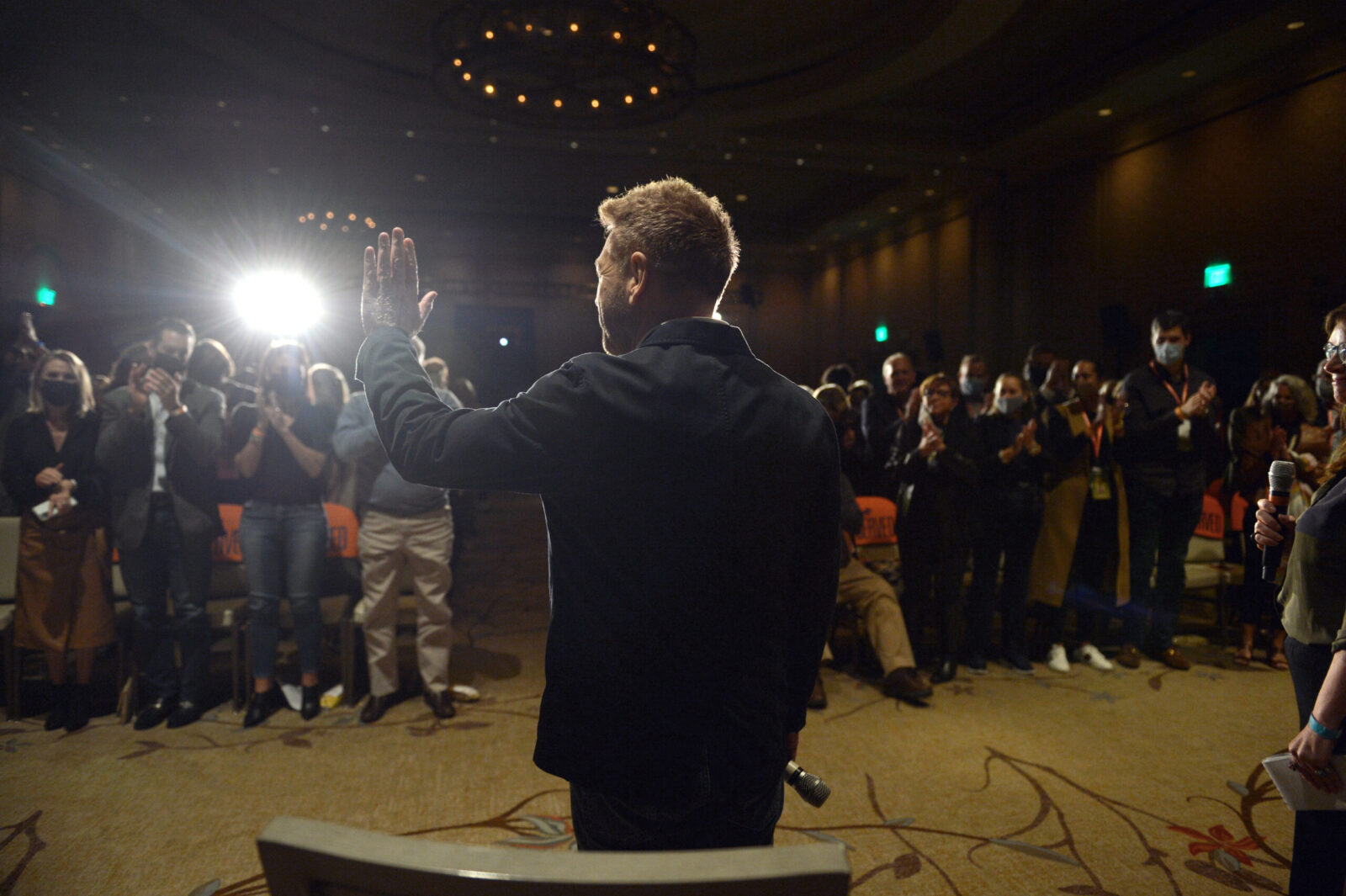
The meteoric rise of artificial intelligence in the past few years has sparked controversies and engaging conversations across industries, including Hollywood. At this year’s Middleburg Film Festival, two prominent AI experts, Zeke Koch and Neil Barrett, shared their thoughts on how AI is reshaping the filmmaking landscape.
The birth of AI began in the 1950s, when computer science pioneer and mathematician Alan Turing posed a radical concept: “Can computers think?” Most AI innovation since then has largely been developed in the arenas of technology, health care, government, and media. However, Hollywood is one of the first visual frontiers where these advancements could be seen by mainstream audiences. In the 1970s, films like “Westworld” and “Star Wars: A New Hope” broke new ground by using computer-generated images, a precursor to AI, created by animators and artists who controlled every aspect of modeling, lighting, and rendering.
Today, many facets of the filmmaking process are AI-assisted. With these platforms, “just type a few sentences and you’ll immediately see something that blows the mind of a person who’s not thinking about it carefully and crushes the soul of anyone who really cares about it,” said Zeke Koch, who specializes in product and AI strategy.
“None of us want to create a world where you hit the auto-generate button and start creating movies with AI at the center,” added Neil Barrett, a former cinematographer and now principal product manager at Adobe. “I’ve never been on a film set that had too much money or too much time, so what I’m interested in is making that day more manageable.”
AI can now transform words, data, and contextual cues into still or moving imagery, a tool that can be invaluable for visualizing concepts before filming or enhancing scenes during editing. “The camera shows what we see in the world,” Barrett said. “What AI generates is what we imagine. And if you use it for imagination, then it’s an incrementally great technology.”
Still, Barrett acknowledged that some tech companies intentionally aim to disrupt Hollywood. “The majority of these companies scrape the internet and record imagery created by professionals in order to create a technology that may affect their work. That’s both an ethical and emotional issue,” he explained.
He continued, “You’ve got creative professionals who are very rightfully worried about this technology. The key is for the media industry to limit it not as a way of saving money… That’s just going to put more pressure on the film industry. Let’s hope that it’s embraced as much for its creative potential as it is for productivity gains.”
In this new era, trust is a major hurdle for creators and audiences alike, who question if what they see on-screen was filmed or AI-generated. “In the next five years, it’s going to be about, ‘Can we trust what we see?’” Barrett said.
Koch, who was the former VP of product for Adobe, agreed: “I think AI’s another tool that humans have, like cameras and paintbrushes and pens, to help people who have the right sensitivities to tell the truth.”
The conversation doesn’t end with ethics; legal challenges such as potential copyright infringement also come into question. “I’m hoping that lawyers spend a long time arguing that over. The longer they argue, the clearer things will be,” Koch said.
He added, “If you care about knowing whether a picture was taken with a camera or generated, there is now technology to do that.”
As the film industry continues to evolve, technology will undoubtedly change how we tell stories, but it will always be the human touch that gives them meaning. “I think we can use this technology to talk about profoundly complicated subjects in very sensitive ways, as long as the people who are using it deeply understand those communities,” Koch said. “It’s about their eye and not the tool that creates the emotional connection.”
Conversations like the MFF panel are vital in shaping a future where AI is increasingly impactful. “There’s still time for us to shape a smart, sustainable relationship with filmmaking that benefits everyone,” Barrett urged. “The key is putting these tools into the hands of professionals so they can continue to do human-centered work with AI assistance.” ML
Published in the November 2025 issue of Middleburg Life.