


Morgantown School Project: Preserving Black History for the Next Generation
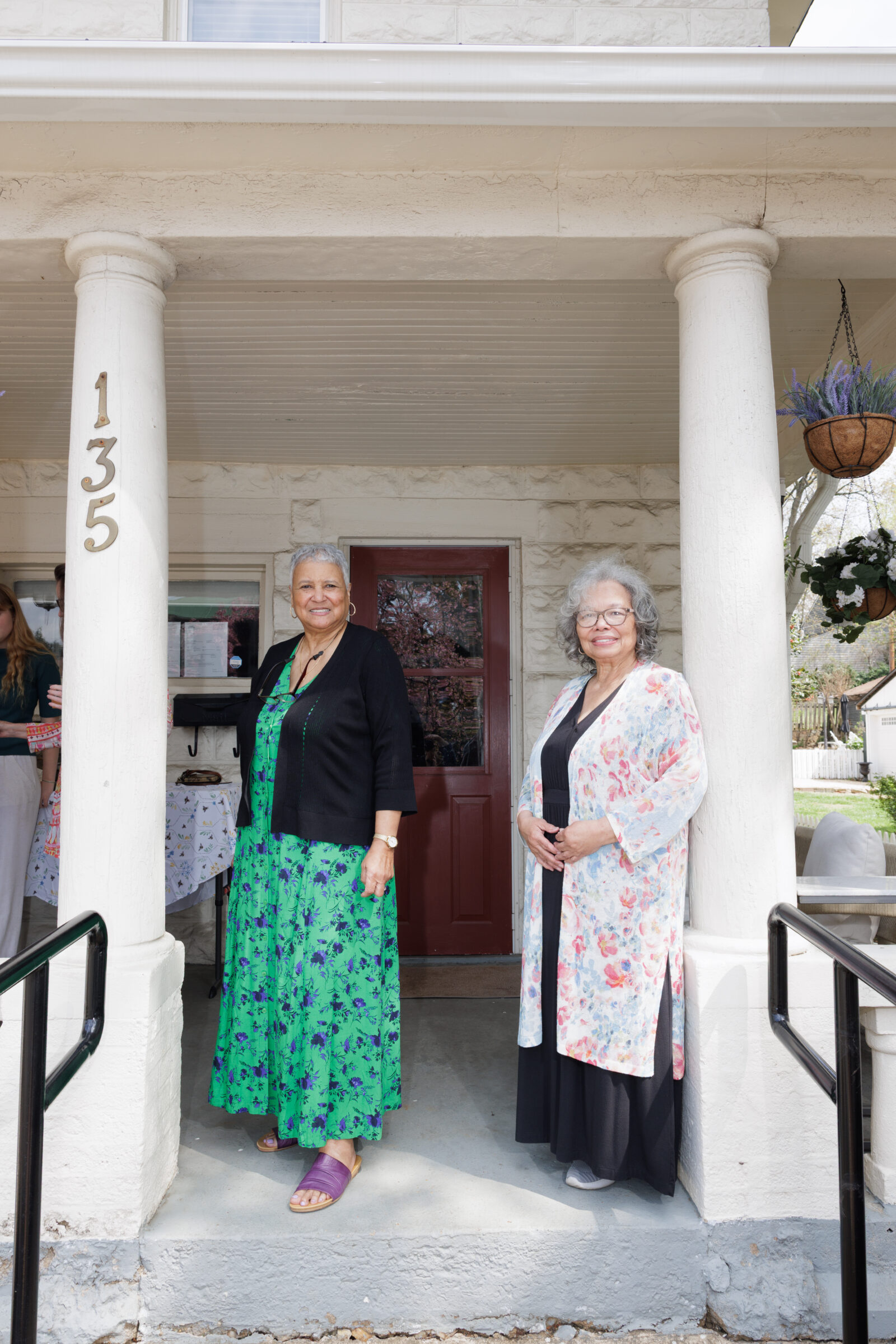
Written by Heidi Baumstark
In northwestern Fauquier County, two miles south of the Town of Marshall, is the old Morgantown School building, which served the surrounding Black community from the late 1800s until 1963, when schools were still segregated. Built circa 1891, this one-room schoolhouse had one teacher teaching up to seven grades. It continues to stand on its stone-and-mortar foundation, with weathered, wooden exterior siding and some parts of those walls missing. Its traditional rooftop belfry that once summoned neighboring students to class is no longer there; the interior blackboards are also missing, with only their rectangular outlines remaining.
Long abandoned, it will now be renovated into a museum, revived for its original intent: to be a source of learning.
But preservation comes with a price. When this 19th-century building was to be auctioned, Dr. Sheila Johnson — renowned entrepreneur, philanthropist, and owner of nearby Salamander Resort & Spa in Middleburg — bought the property and contacted Karen Hughes White, director of the Afro-American Historical Association of Fauquier County (AAHA), a nonprofit located in downtown Warrenton. At the time of Johnson’s purchase, she was unaware that White had actually attended Morgantown School in 1959 until it closed in the winter of 1963. In 2001, Johnson donated the site to the nonprofit cofounded by White and Karen King Lavore. White and Lavore share family ties, and in the late 1980s, embarked on a genealogical journey that led to AAHA’s formation in 1992.
White’s older sister, Angela Davidson, also attended Morgantown School, and leads the AAHA’s Morgantown School Project. “Saving the school provides an opportunity to visit a living history community in the Morgantown Historic District and beyond,” White says. AAHA’s website has a dedicated web page specifically for the school, which includes photos and stories of former students, teachers, and families of Morgantown.
After over two decades of fundraising and cleanups, the project has received grants and contributions from the Virginia Outdoors Foundation, PATH Foundation, Catesby Foundation, and NOVEC utility. It has gained an open space easement from Fauquier County that preserves the property, and in late 2025, broke ground on the plan to restore the building, plus add modern facilities such as parking and restrooms. This first phase is projected to be complete by this summer; AAHA continues to seek funding for its full restoration.
Alumni are also playing a major role in their school’s preservation, and young students at nearby Mountainside Montessori School in Marshall have contributed to the project by temporarily moving plants off-site until the grounds are ready for their return. These students also collected hundreds of artifacts from the crawl space of the wooden structure, some of which will be displayed inside the school.
Two Sisters Remember
Davidson was a student at Morgantown School from the fall of 1955 to spring 1958. First through seventh grades were taught in the small one-room wooden structure by Freeman R. Berlack. “He was also a boarder in our house,” Davidson adds.
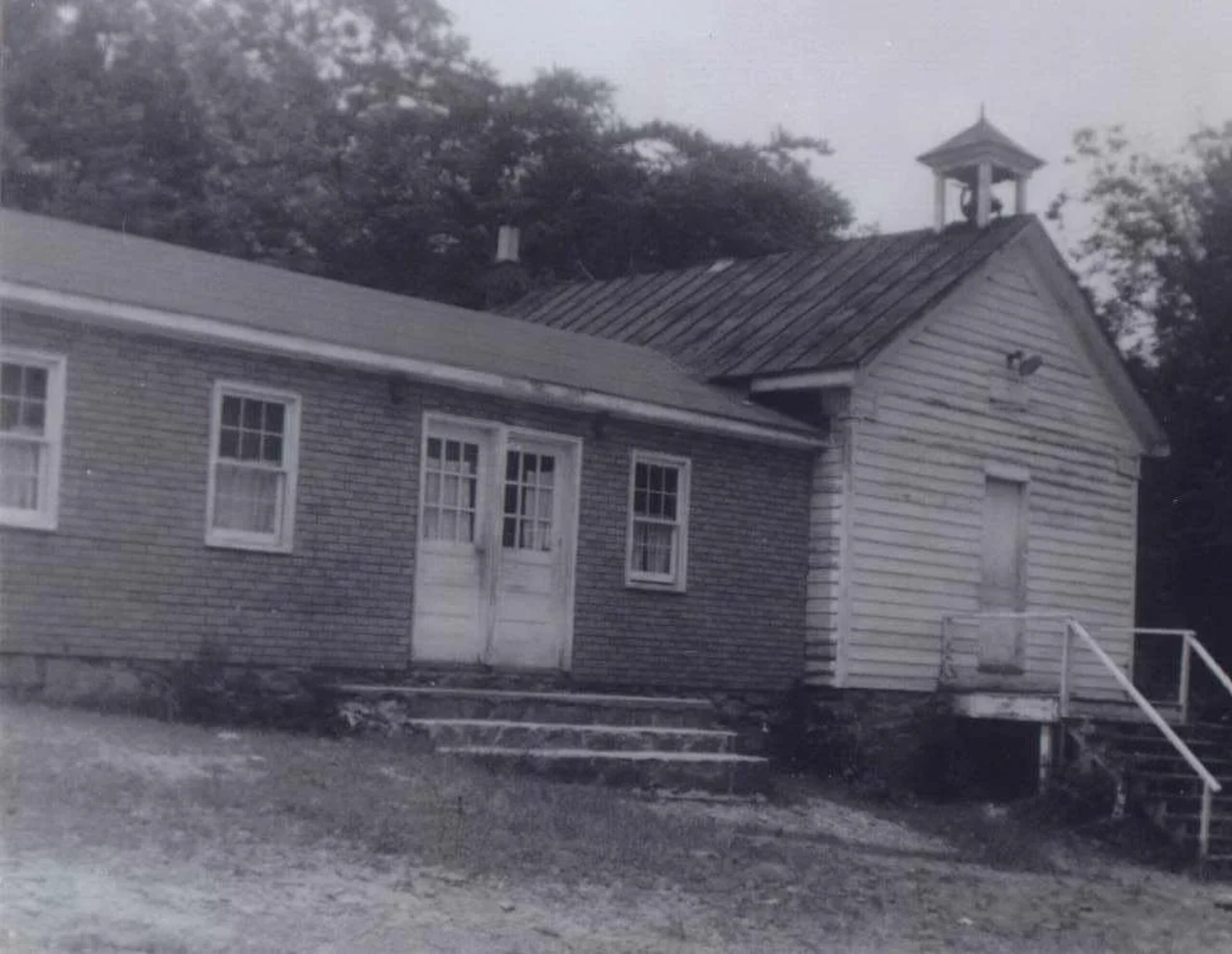
It was during his tenure that the second room, a faux brick structure, was added in March 1957. The local Warrenton newspaper called Morgantown School a “building inadequate for [students’] needs,” which led to a movement to build the multipurpose room onto the existing schoolhouse. Students were part of the fundraising, hosting lawn parties and going house to house to sell boxes of candy. “I remember we had raffles,” Davidson says. Much of the work was completed by parents. Unfortunately, this addition later collapsed, but the stone steps in front remain.
Many children walked the narrow Free State Road to attend class. Those who lived off nearby Mount Joy Road took a shortcut through the woods. In the late 1950s, a school bus brought children from the Marshall area. “The first driver I remember was Mr. Eugene Queen,” Davidson recalls. “Some students were transported by bus from farms around Scotts Road.”
Berlack would ring the big bell in the cupola. There was a water cooler and a washstand to clean hands before lunch. Davidson says students all knew each other. “Everybody had a cousin, a sister, or a brother — we were so intertwined.”
The teachers following Berlack were “Mr. Exum, Miss Cook, and Mrs. Tibbs,” Davidson remembers. “The teacher immediately before Mr. Berlack was Miss Frances Edmonds; I met her when I visited the dental clinic, which was held at the school.” One of Morgantown’s teachers, Eura Lee Hudgins Lewis, is credited for having the vision for the 2018 formation of the Middleburg Museum, also known as The Pink Box.
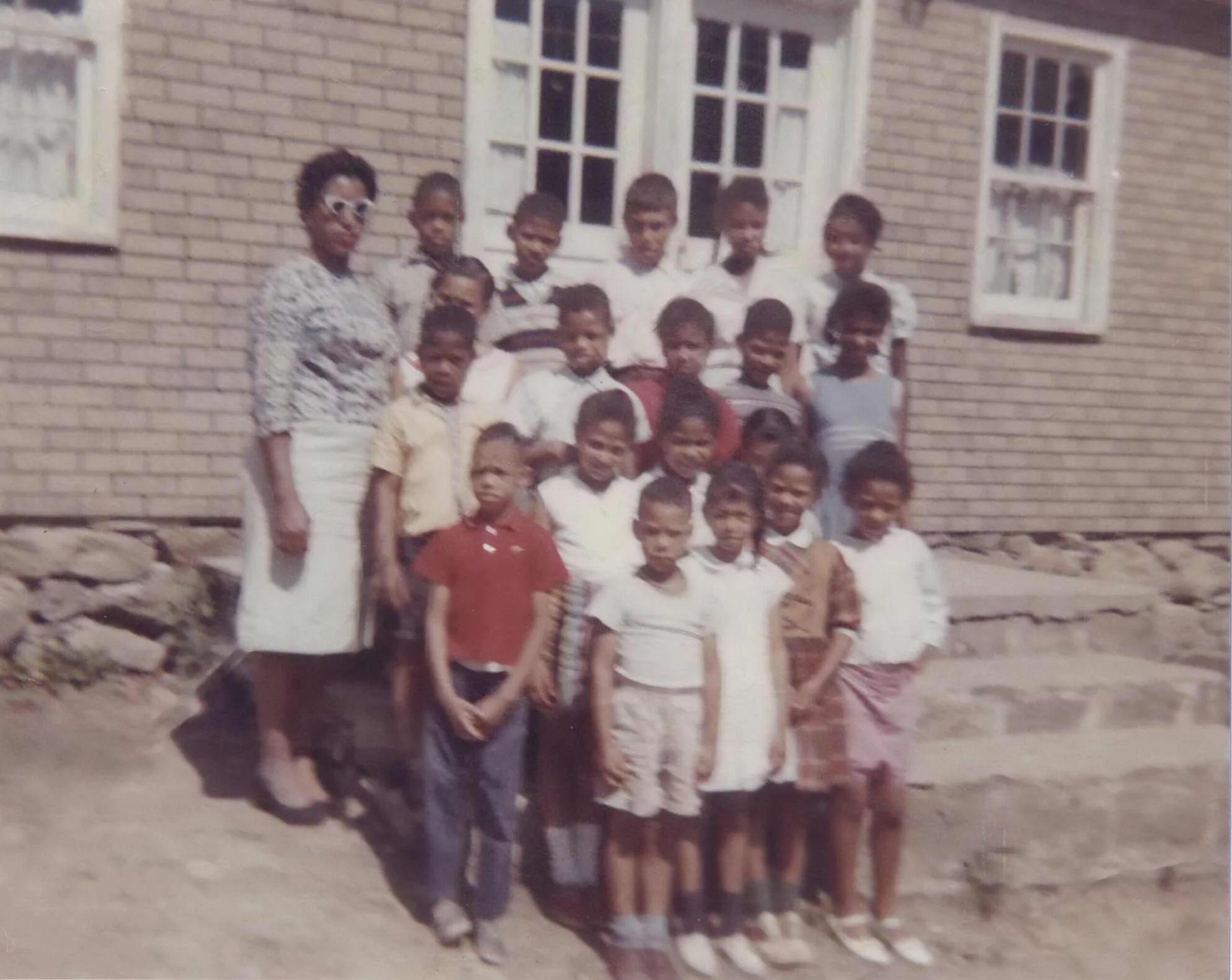
White attended Morgantown School from 1959 until it closed in 1963. “Mr. Exum was my first-grade teacher and Miss Cook was my second- to fifth-grade teacher,” White shares. “I remember the layout of the classroom, along with certain events having lasting memories, like the Cuban Missile Crisis, the death of President Kennedy, telephone etiquette, fire drills, and visits from the health department’s dentist.” She also has memories of field trips to a nearby beaver dam and going to Schoolhouse No. 18 in Marshall for lunch and a softball game, plus bus trips into Washington, D.C.
From a young age, students learned to contribute to their community by being given responsibilities each day. Boys would fetch water in a bucket from the spring across the street and gather wood to light the stove; girls would sweep the floor and dust blackboard erasers.
Davidson recalls, “The classroom — one big classroom — was orderly. The teachers were unbelievably gifted. We want the Morgantown School story to be one of success, not only for the students and educators, but for the parents and the whole community who worked alongside their children and teachers. It is our hope that visitors will have an appreciation of what they have now in comparison to how others learned decades ago.”
The School’s Start and End
In a deed dated August 6, 1891, Bennett Saunders deeded to Fauquier County a parcel of land on the main road for the purpose of constructing a school building for the community. The parcel was described as containing about one acre, and provided for access and use of the spring to benefit the school. The selling price was $40. For such a small community, this action highlights the importance placed on education.
After the court-ordered desegregation and consolidation of schools resulted in Morgantown School’s closure, students from most of northern Fauquier were bused to the newly built Northwestern Elementary School, now named Claude Thompson Elementary, on Rectortown Road in Marshall. It was a significant change for the Morgantown students, many of whom were used to walking to school.
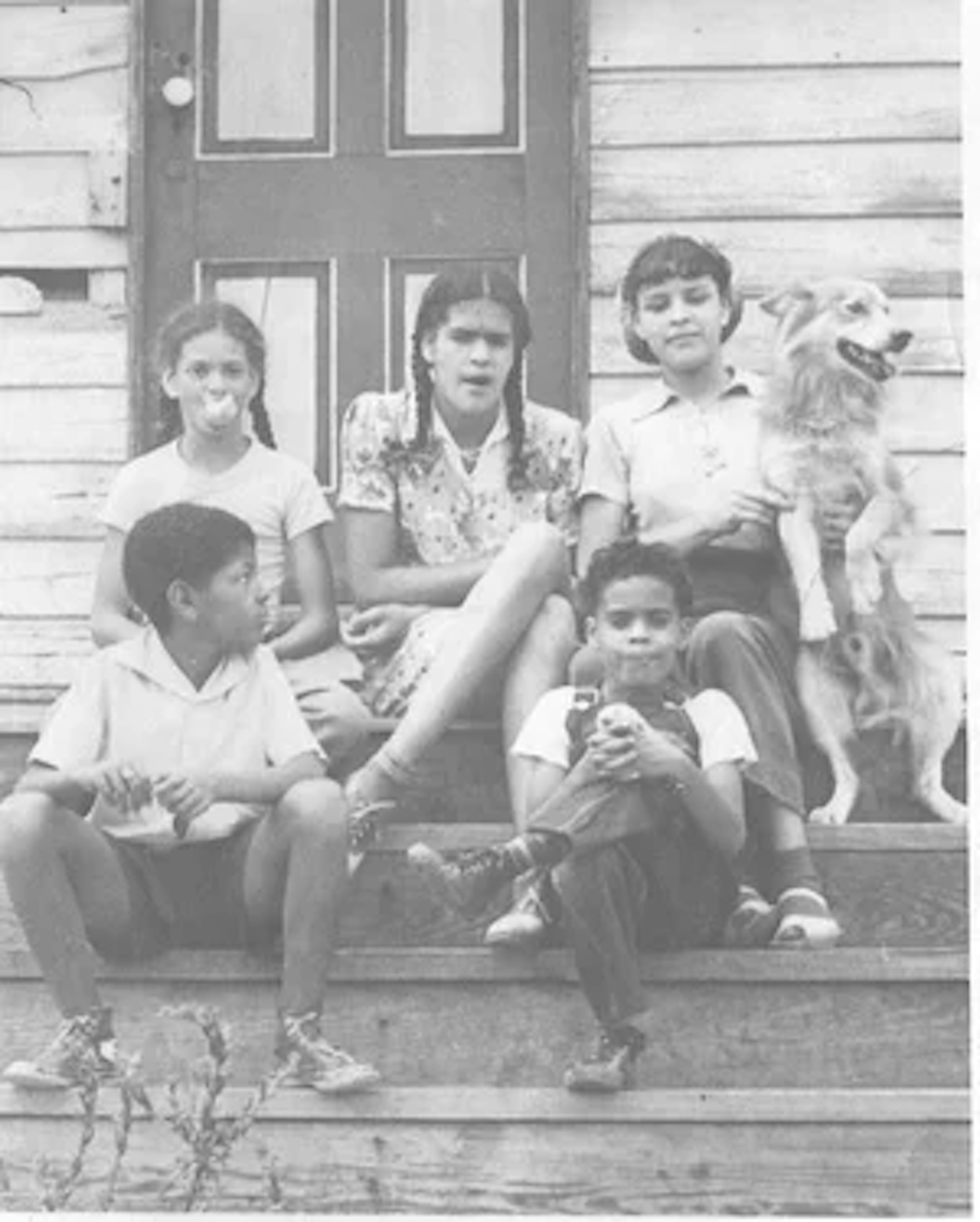
Faith, Learning, & Community
Through centuries of slavery, segregation, and desegregation, Fauquier’s African American population survived and prospered. Churches, schools, and businesses were born, as well as organizations that enhanced the quality of life for the entire county.
Davidson says, “Not everybody went to college, not everybody went to trade school, but everybody worked together in families. We didn’t have everything that some other people had, but we were happy. I guess you could call it the story of a community.”
When asked how she feels about the project, Davidson shared, “I feel very good to have this little school continue to teach.”
By holding on to important stories and artifacts and passing them down to future generations, museums keep the legacy going. Thanks to the efforts of many, Morgantown School will stand as a testament of a resilient community that can be proud of its roots.
Morgantown School is located at 4706 Free State Road in Marshall. To learn more, visit morgantownschoolproject.org. The Afro-American Historical Association is located at 135 Main Street in downtown Warrenton; to learn more, call (540) 253-7488 or visit aahafauquier.org. ML
Featured photo: Karen Hughes White and Angela Davidson. Photo by Michael Butcher.
Published in the May 2026 issue of Middleburg Life.