


50 Years and Counting: The Wonderful World of Wolf Instruments
Written by Kaitlin Hill
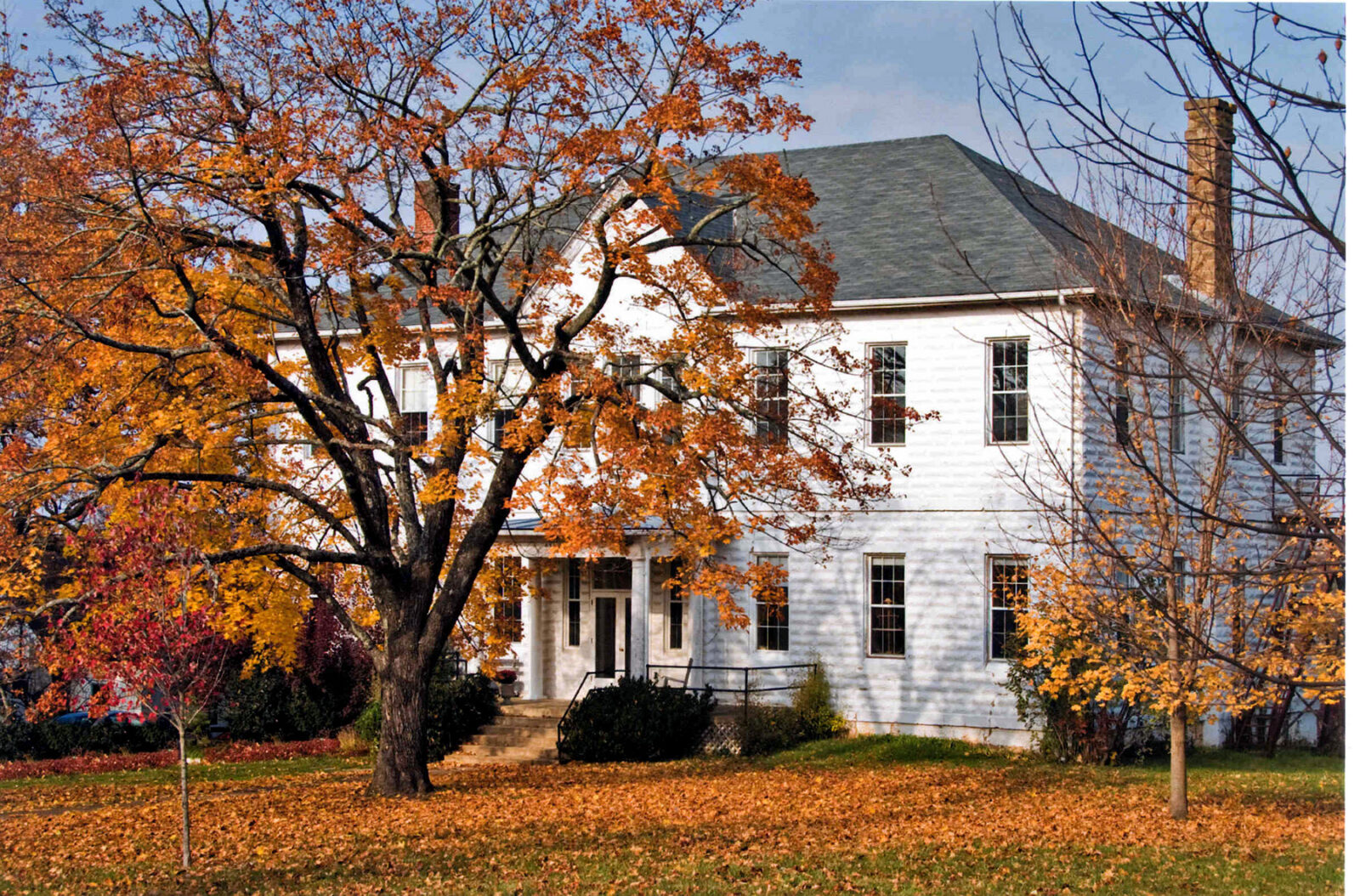
Approaching the schoolhouse on a crisp fall day feels very much like stepping back in time. There is something whimsical about the century-old building, flanked by towering trees, tucked just off Main Street in The Plains. The enchanting atmosphere of Wolf Instruments is enhanced by a black cat named Zippi, who is likely to greet visitors at the door.
But the real magic is inside, in the workshop, where Thomas and Barbara Wolf can be found restoring, repairing, and creating harpsichords, basses, and fortepianos as they have done for 50 years.
“We’re counting 2025-26 as our jubilee year,” shares Barbara, with a coffee in hand and Zippi at her feet. “We opened in 1975.”
Thomas and Barbara met as students at the Interlochen Arts Academy in Michigan, “at the age of 15,” Barbara notes. It was there that they would also be introduced to the harpsichord.
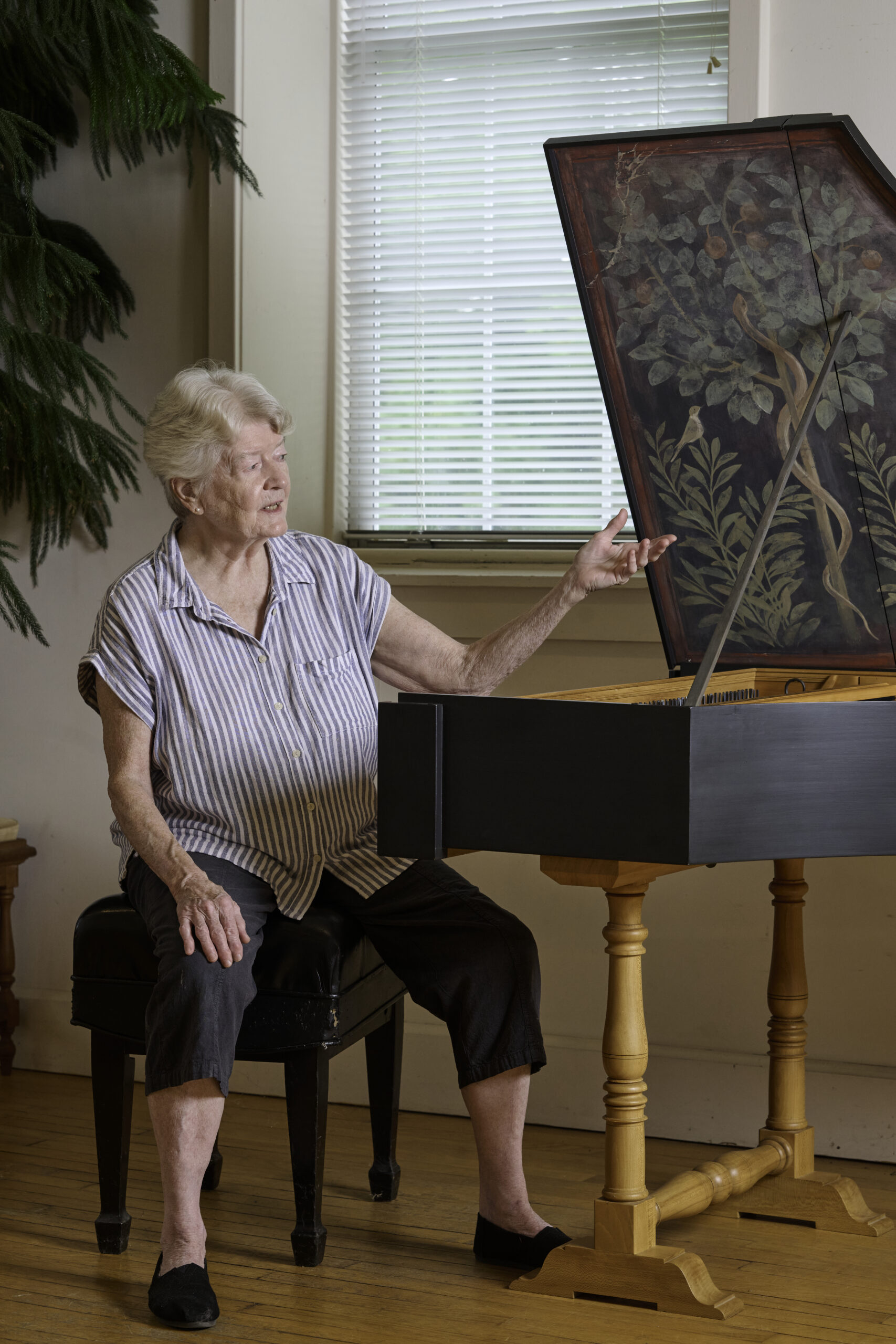
“You had to give a recital before graduation,” Thomas explains. “Back then there was very little literature for string bass instruments for high school students. It was mostly Baroque transcriptions.” He continues, “So I cobbled together a harpsichord to play at my senior recital.”
“This is to say, he made something from a kit,” Barbara adds.
Both would go on to the New England Conservatory of Music in Boston. “After our freshman year, we got married,” Barbara says. “We were very young.”
And academically, “I had to play in the wind ensemble,” Thomas shares. Barbara adds, “The new music ensemble. The stuff nobody wanted to do.”
“I was always coming into rehearsals early, and there would be one of two guys tuning the harpsichord,” Thomas recalls. “He turned out to be a world-famous harpsichord maker, and the other was also very well known.”
“We were in our second year of marriage,” Barbara explains, and “I needed a summer job,” Thomas adds with a chuckle. Thomas would go on to work for the harpsichord maker, and “the guy said, ‘You should consider sticking with this. You’re good at it,’” Barbara remembers.
By the fall of 1969, both were working for the harpsichord maker full-time and “playing and taking lessons and doing other musical stuff.” Barbara says with a laugh, “But the money was better working for the harpsichord maker, so that is how we got our start.”
At the time, Thomas says, “We didn’t know we were starting with the very best people.”
“But we figured this out pretty quickly,” Barbara continues. “Boston, in fact, was the center of the world for harpsichord making.… No one else was doing it at the time.”
“We didn’t know we were starting with the very best people.” –Thomas Wolf
The Wolfs would work for household names like Eric Herz and Frank Hubbard before “Tom got a position at the Smithsonian to restore an instrument and to be a guinea pig for this new training program in conservation,” Barbara recalls, “…which is how we ended up in Washington. He got fabulous training and education.”
Barbara stayed in Boston, assuming Thomas would return and the couple would open their own shop, but “there were a lot of those in New England and we thought, ‘Well, nobody is doing this down here,’” she explains.
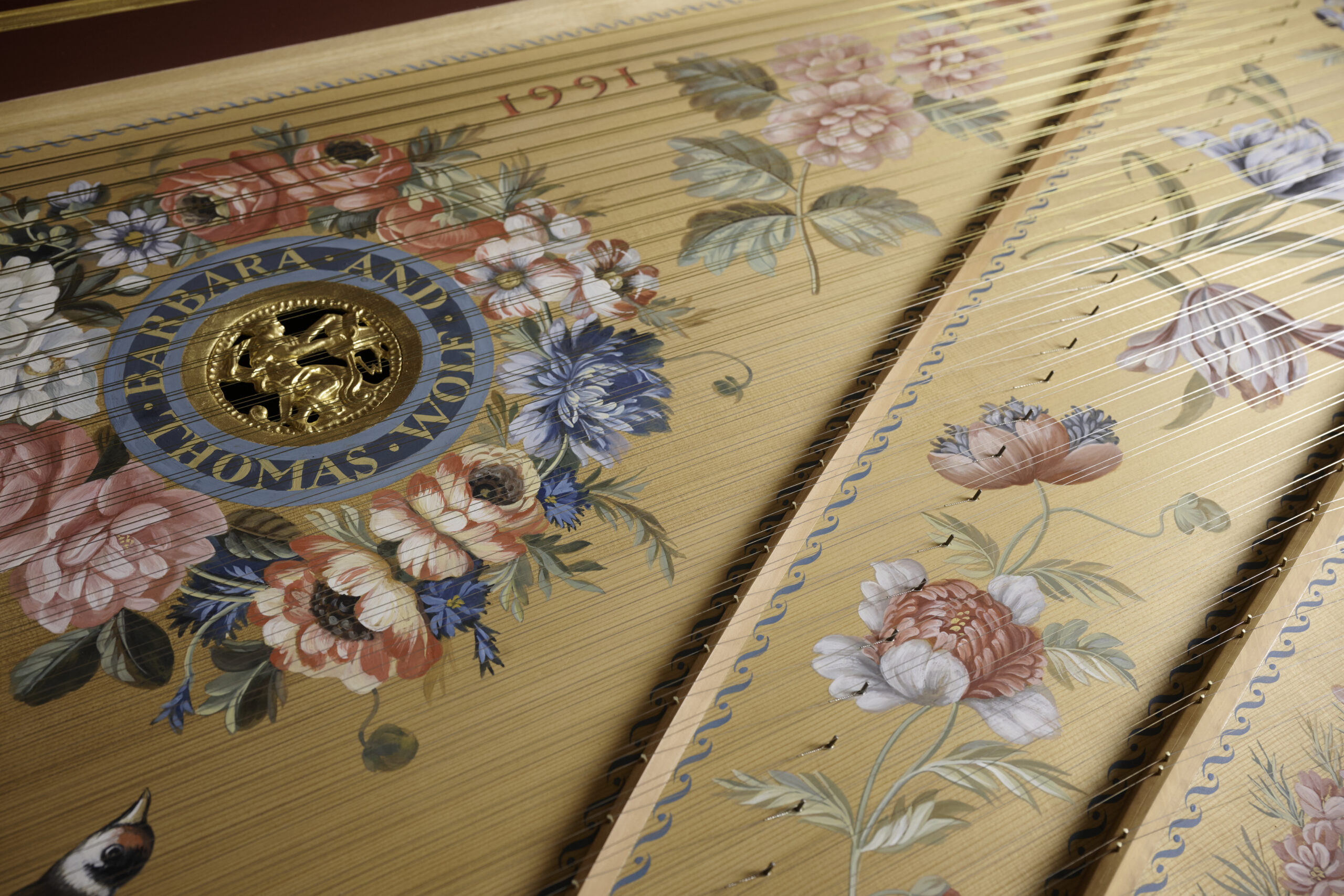
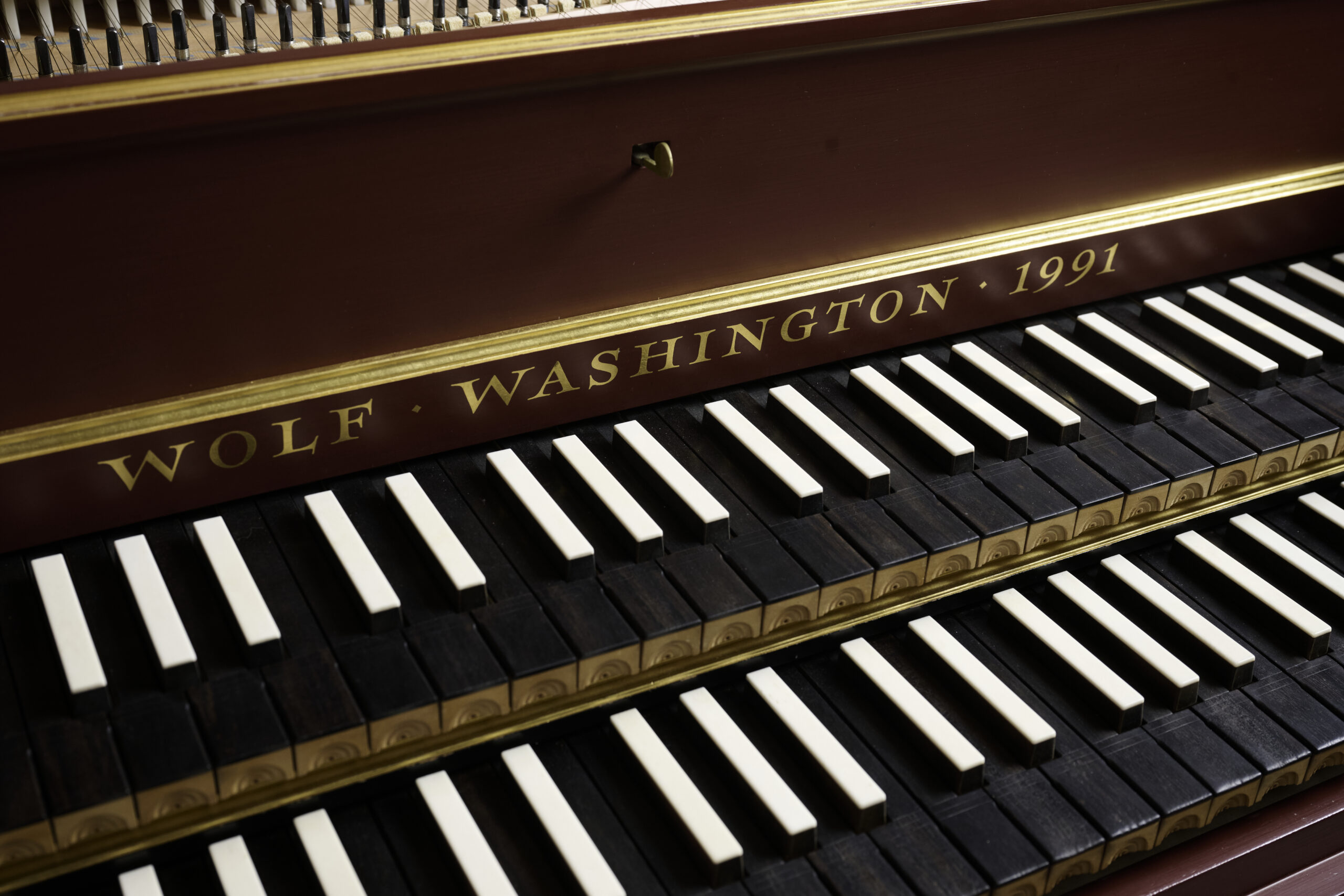
Instead, the couple opened their first shop in D.C. in 1975 and began to build their reputation, shipping instruments all over the world. “What really put it over the top was the 200th anniversary of the death of Mozart,” Barbara says. This was in 1991. “There were conferences, concerts, and festivals. Suddenly people were like, ‘Oh, we’re going to need a fortepiano. We can’t do this on a Steinway; we need something contemporary.’”
“We were getting orders from all over the world,” Thomas says. Barbara continues, “We realized we were never going to meet these people, they were never going to come here, and they didn’t care where we lived. We realized we didn’t really have to be in D.C.”
A friend from the New England Conservatory of Music would “ask us to come out to the farm,” Barbara shares. “Eventually she started to say, ‘You should move your shop out to The Plains.’
“In the late ’80s and early ’90s, we had a big shop and a lot of people working for us, but we needed even more space than that. By chance, we were having a picnic with our friend. We had never gone this direction in The Plains before … and we drove past this place.”
It was not the storybook former schoolhouse it is today. “The grass hadn’t been mowed in two years, there were birds flying in and out of the upstairs windows, and there were toilets on the front porch,” Barbara remembers. “It was in terrible shape, but it was fabulous.”
The Wolfs moved their operation to The Schoolhouse on Main Street in 1992. Even while renovating the house, they kept to their rigorous production schedule, which that year included seven pianos, a handful of harpsichords, and even a clavichord for the Cleveland Museum of Art.
“By chance, we were having a picnic with our friend. We had never gone this direction in The Plains before … and we drove past this place.” –Barbara Wolf
The rest, as they say, is history, which the Wolfs document on their Facebook page in a “Wolf Instrument Wednesdays: Celebrating 50 Years!” series. The vignettes act as a time capsule, offering a snapshot of life with industry updates, the Wolfs’ professional accomplishments, friends lost, friends found, and broader comments on the state of the world.
“This was Jacob’s idea,” shares Barbara.
If Thomas and Barbara represent the last 50 years in the industry, then Jacob Stone embodies the next. In their 2018 commemorative Facebook post, they wrote, “By 2018 a glimpse of the future had appeared in the shop, although we didn’t know it at the time: Jacob Stone, just 22 and in his last year as a bass student at Shenandoah University, played his senior recital on an early 20th-century bass that he restored under Tom’s supervision as a learning project.”
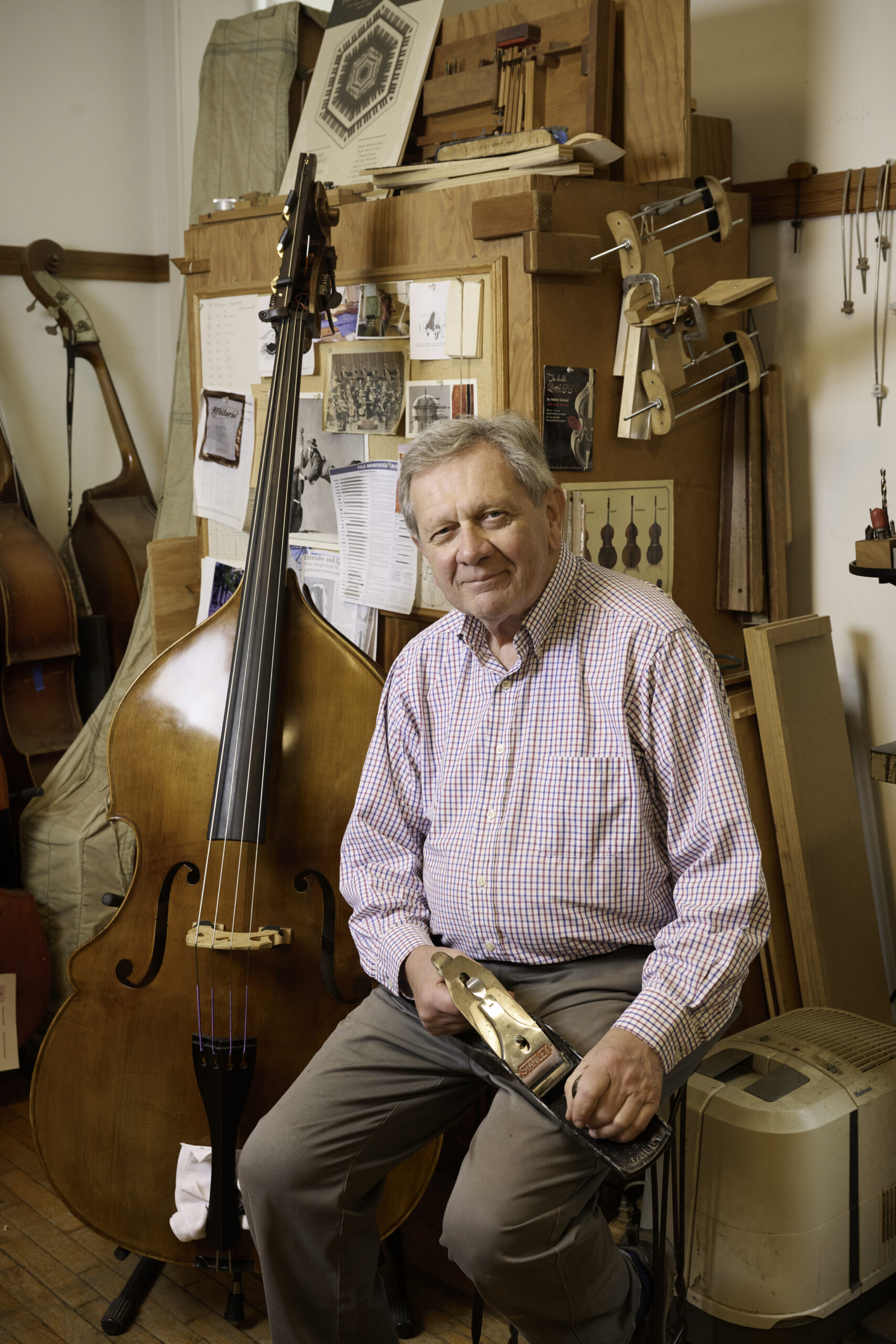
Originally from Winchester, Stone’s specialty is the double bass, which he can play, repair, restore, and build anew. He got his start with Thomas and Barbara as far back as high school, when his bass broke and a teacher recommended the Wolfs for the repair.
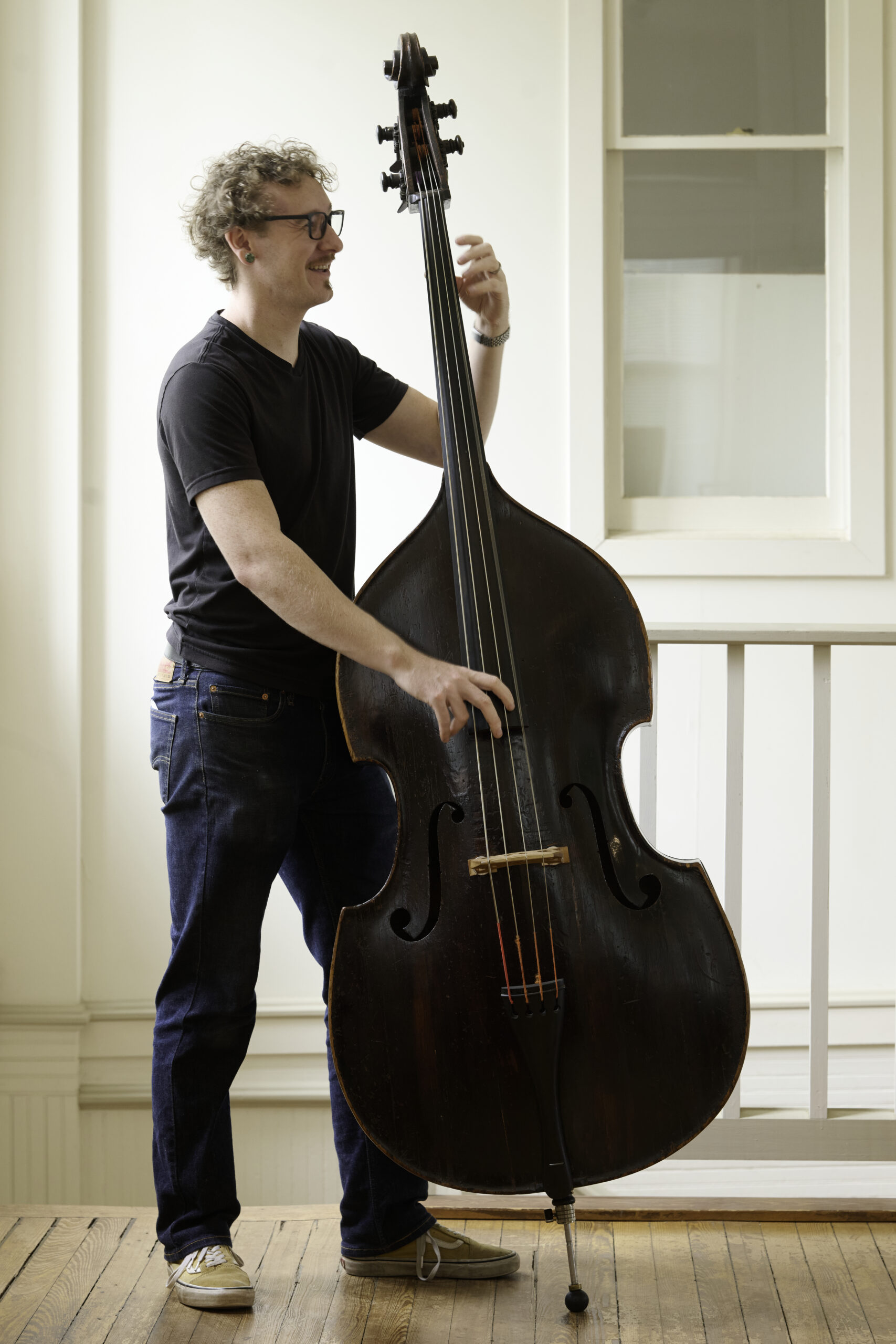
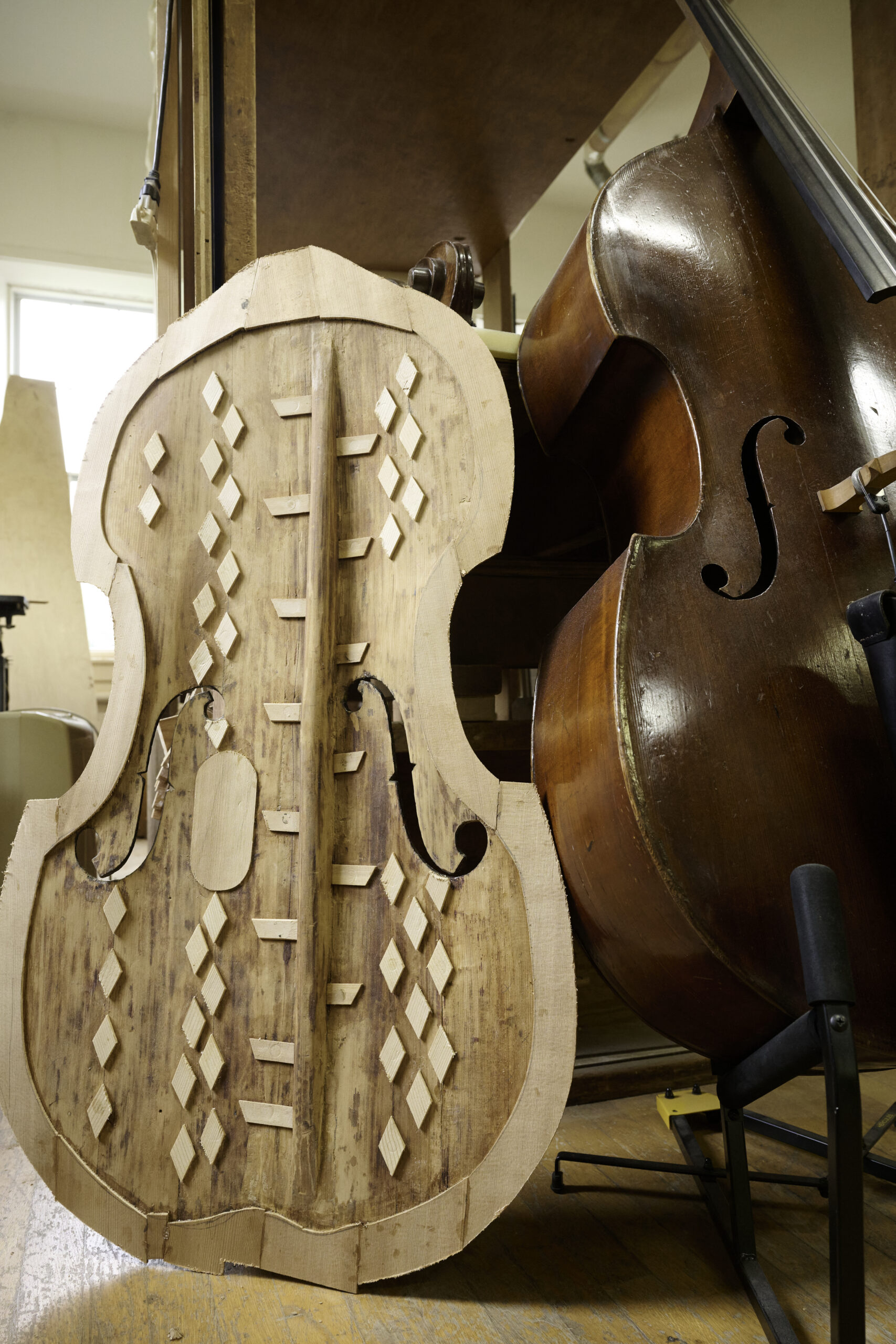
“I grew up fairly financially challenged,” Stone shares. “[Basses] are big, scary, fragile instruments, so I thought I should learn how to take care of them.”
He asked Thomas to teach him. What started as one day a week turned into “pretty much any time I could be here,” Stone says.
When COVID struck in the spring of 2020, Stone, who was pursuing his master’s at the University of Iowa at the time, took the shutdowns as an opportunity to get his foot further in the door. “He called and said, ‘If I come back for the summer, can I be in the shop full-time?’” Barbara remembers. “He said, ‘You don’t have to pay me, I’ll do whatever you want — I’ll fix the fencing, I’ll mow the grass.’ And he did,” she adds.
The following year, Stone would play his master’s recital on a bass he built at Wolf Instruments, graduate, and return to The Plains to officially join the team. He’s been there ever since, and in addition to building their social media platforms, he’s boosted the bass business and his own reputation.
“I get paid to do what an awful lot of other people would like to do for fun. So I plan to keep doing it for a long time.” –Stone
In 2025, one of his instruments won a silver medal for tone and a Certificate of Workmanship at the International Society of Bassists Maker’s Competition.
When asked what the team at Wolf Instruments has planned for the next 50 years, Barbara says, “That’s up to Jacob.”
And for Stone, “I get paid to do what an awful lot of other people would like to do for fun. So I plan to keep doing it for a long time.”
While not exactly passing the torch just yet, the Wolfs are intent on stewarding the next generation of historical keyboard and double bass masters. “We feel very lucky for Jacob because we didn’t go looking for him; he just turned up and was smart enough to stay,” Barbara says. Stone continues, “There are big projects coming down the pipeline that Tom and Barbara definitely have to oversee, and then figuring out the transition point” will be the next target.
Barbara concludes, “We are happy to say that is where things are going … but we’re not done yet. We’re not sure how ‘not done yet’ we are, but we’ve come out of it all with the feeling of, oh what the hell, let’s keep going.” ML
Featured photo courtesy of Wolf Instruments.
Published in the November 2026 issue of Middleburg Life.