


Life Lessons at Middleburg Montessori
Written by William Anderson | Photos by Gracie Savage
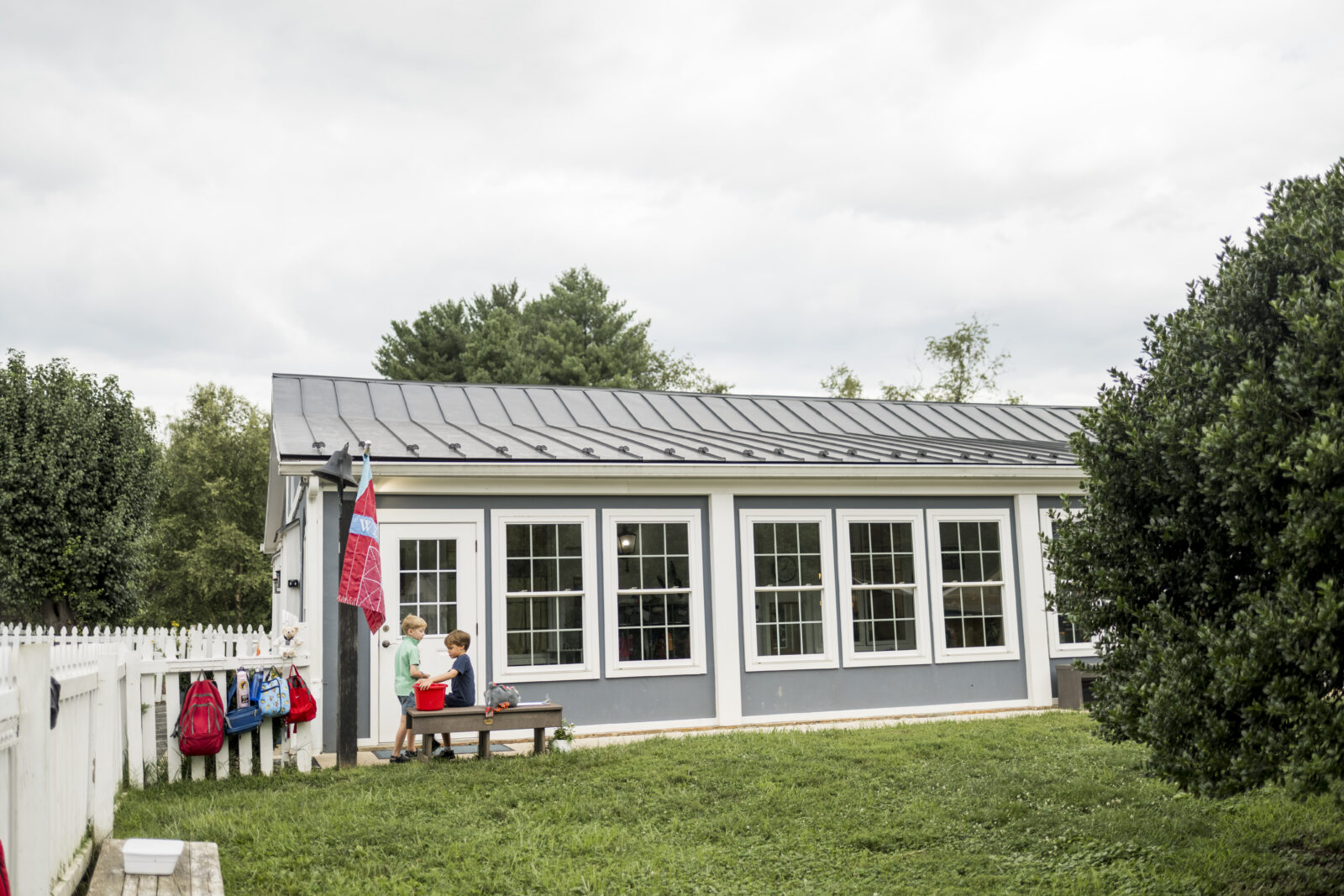
Visitors to the Middleburg Montessori School may be surprised to observe children as young as 3 doing dishes, sweeping, or even preparing a snack for their classmates. This is all part of the students’ three-hour morning work cycle. Here, students choose what they would like to work on that day and how they can help out. “They’re learning skills of everyday life,” says administrator Addie Jenkins. Developing life skills doesn’t just mean learning how to do household chores, but also fosters independence and good decision-making. The effort is to give every student a tailored education that goes beyond a textbook page and gives them the why behind the what.
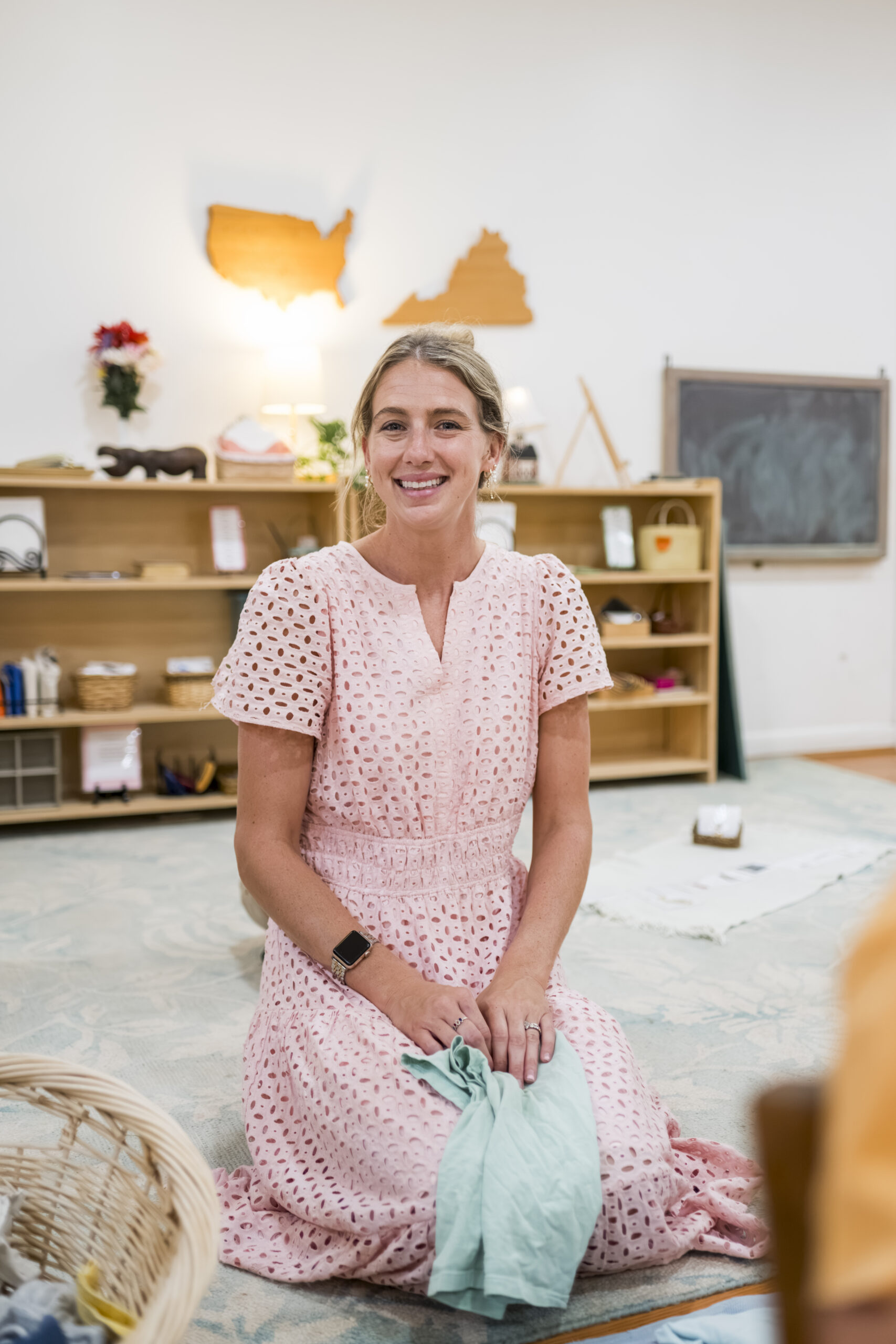
Part of teacher Cassella Slater’s job is to facilitate what each child can choose to learn. “They are growing that capability that we rely on, as adults, to wake up in the morning and go to work and do something that you might not really love to do,” Slater says. Montessori believes giving students more freedom will help them develop internal motivation. In order to become contributing members of society, motivation must ultimately come from within.
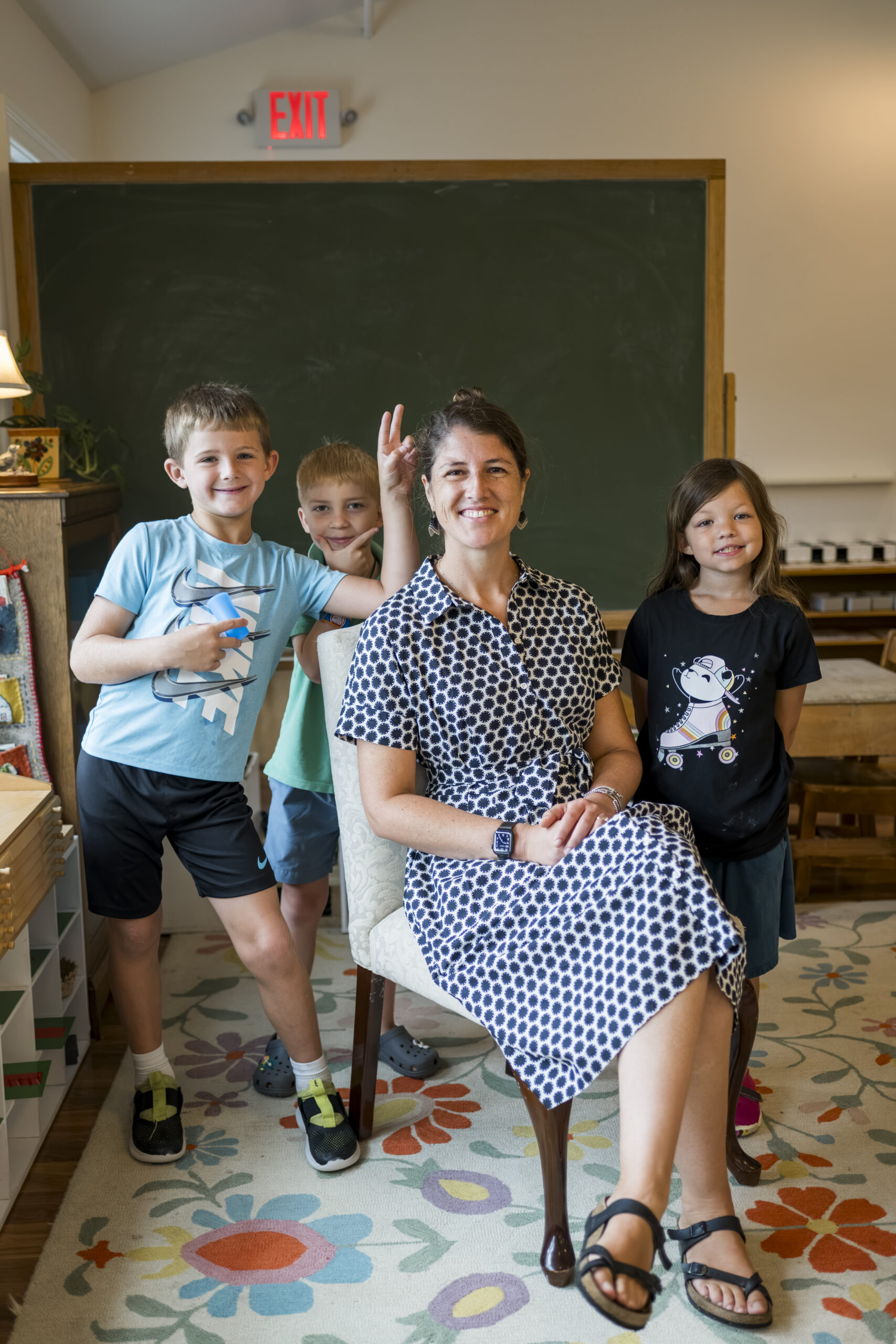
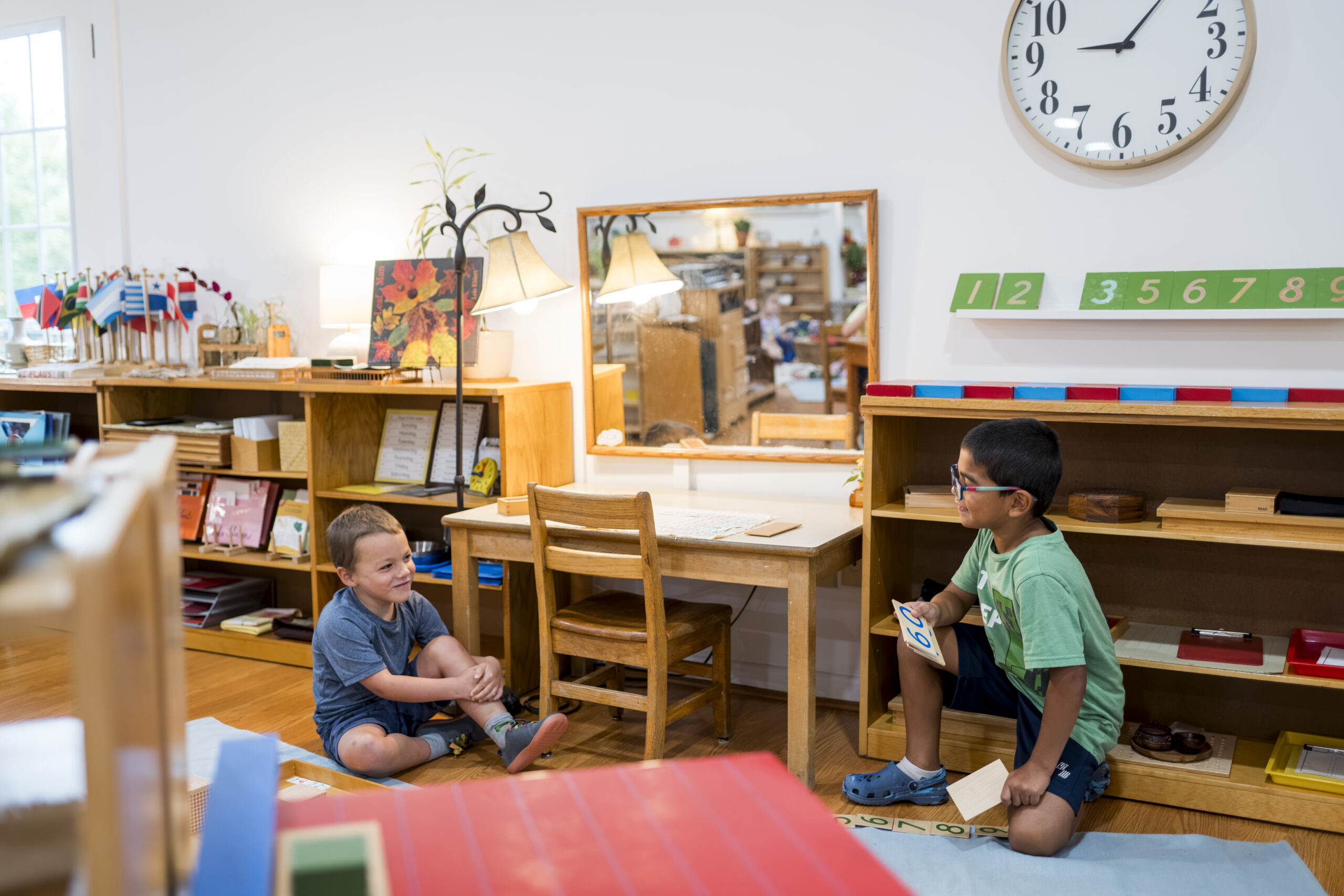
Some might think that going to a school that has math and chores is a child’s worst nightmare. However, Montessori finds that most children are eager to contribute. This is due in part to the three-year cycle in their primary classroom, which has students aged 3 to 5. As the students return each year knowing more, they are encouraged to help teach their younger peers. It’s not uncommon to see a 5-year-old helping a 3-year-old learn how to tie their shoe at Montessori. Another unique benefit is allowing students to delve into and then share a passion. For example, one student who has a passion for math is able to share that enthusiasm with another student who does not. The students love this system. “They want to do it. They want to show it off. They want to be supportive, and it feels good,” Slater explains.
Montessori intentionally brings students into the community rather than confining learning to a classroom. They often take field trips to the State Arboretum or Goose Creek. Many students love visiting the library or going hiking. They’ve also planned a camping trip where students are encouraged to bring their families. “It’ll be both a learning and also just a fun experience,” says Jenkins. Like with all other parts of the Montessori model, students will be the ones setting up the tents and helping make the food.
Jenkins estimates about 70% of students are from Middleburg and Marshall. The school, which has been in Middleburg for 45 years, makes an effort to connect with local artists and businesses, such as with the Art of the Piedmont auction and reception, which is Montessori’s only fundraiser.
Beyond being part of the community, the school cultivates its own family-style environment. Older students are more like older siblings than upperclassmen. The ratio of students to adults is about 4-to-1. “We really feel like a family here. We’re so small, and everybody knows everybody. All the teachers know all the kids, and all the kids know all the teachers,” says Slater.
Montessori’s goal is to support the whole child, not just push them academically. Teachers like Slater are trying to teach independence and confidence. “It does allow them to reach their fullest potential and not what the adult thinks is possible,” she says. ML
Published in the September 2026 issue of Middleburg Life.